Showing posts with label Mother And Child. Show all posts

Fetus In Uterus It Can Laugh and Cry

Babies in the womb was already able to express facial movements such as laughing and crying faces. Facial expressions turned out to already be done by the baby before birth and when the pregnancy was 24-36 weeks, fetal facial movements become more complex.

This is a study for the first time about the baby's facial expression in the uterus. Researchers analyzed videotapes of fetal facial movements obtained from 4D ultrasound machine at the final stage of pregnancy. Researchers observed the same healthy fetus at 20 weeks gestation, and made ​​several observations again at age 24 to 36 weeks of gestation. As reported by ScienceDaily , Thursday (09/15/2011), researchers found that the fetal facial movement became increasingly complex over time.

Researchers looked at the fetus at 24 weeks gestation were able to move one muscle in their faces. For example, stretch the lips or mouth opening. At the age of 35 weeks gestation, the fetus is able to combine a number of facial muscle movement, such as stretching the lips, lowered eyebrows and smile lines deepen the groove, thus changing the expression of movement into a more recognizable and more complex. "This is an exciting new insights in the process of fetal development. What is remarkable of this study is the first time demonstrated that the fetus is healthy there is progression from simple facial movements are becoming increasingly complex, preparing the fetus for life after birth, "said Professor Brian Francis of the Department Mathematics and Statistics at Lancaster University.

While it can not make a sound, the development of fetal facial expression makes the baby at birth has mempu perform facial movements to accompany crying and laughing.  "We found more than we expected. We know that babies can blink before birth, and several studies have identified a frown on your baby before birth. But in this study, for the first time we have developed a method of coding and analysis that enables us to objectively track the increasing complexity of movement from time to time that produces a recognizable facial expressions , "explains Dr. Nadja Reissland from Durham University.

The investigators suggest that the patterns of motor movement develops before the baby can feel the emotion, such as breathing exercises movements in the womb even before the baby can breathe. This discovery has the potential to identify health problems in the womb, because there is a connection between the behavior patterns of the fetus and fetal brain development. Seeing the difference between the face of normal fetal development and may show abnormal brain development problems. The researchers now plan to see whether fetal facial movements can help distinguish between the fetuses of mothers who smoked during pregnancy and maternal non-smokers. Researchers will examine the relation with angry facial expressions, smiles and sad.

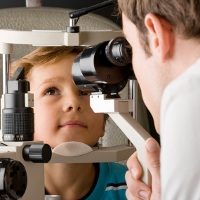
Check the eyes, If the School Achievement in Children Declines

Almost about 80 percent of the things children learn is obtained through vision, and studies show 70 percent of the 2 million school-age children have difficulty reading because of vision problems such as ocular motor, perceptual disturbances or binocular disorders. "If a child is struggling in school when learning, then it is important to parents is pay attention to his eyesight, "jar of Dr. Joel Zaba, a researcher and ophthalmologist, as quoted from Medicinenet , Wednesday (14/09/2011).
Dr. Zaba said there are several things you can make a child's academic achievement in school is not good, but a disturbance in vision could give a great impact on children. Studies show that a simple eye examination can provide an early indication of problems relating to distance eyesight that can be seen well. As for other eye conditions that can affect children's performance in the classroom often need an in-depth examination.

Here are 10 signs that may occur in children who have difficulty or impairment of vision, namely:
1. Squinting or closing one eye when she saw something
2. Holding or memabca book in the near distance from the face
3. While reading he was losing lines or sentences he was reading
4. Often feel a headache, dizziness or nausea while reading
5. Often cocked his head to one side
6. Often daydream
7. Using a finger as a signal for writing is reading
8. Showed a declining school performance
9. Rubbing eyes repeatedly
10. Having excessive clumsiness

"We recommend all students to perform comprehensive eye examinations on a regular basis, usually because a child does not realize the problems it has," says Professor Sally L Smith, as the founder and director of The Lab School of Washington. By evaluate eye health and skills view could be an important key to teaching and learning process of children, such as using both eyes right, eyes ability to focus when reading or viewing and the ability to move the eyes when reading.

Fish Oil Make More Focus on School Children

Concentration and focus are needed for children in schools to be more receptive to the lessons given. Besides having to study hard, taking fish oil can also help children focus on school.

Omega-3 fatty acids which are also called essential fatty acids are certain fats that are needed but can not be produced by the body. Therefore, the body needs omega-3 fatty acids from certain foods such as from fish oil.

According to the University of Maryland Medical Center, omega-3 fatty acids may benefit health by reducing cellular inflammation, reduce the risk of heart disease, cancer and arthritis, supports healthy brain and regulate cognitive function and behavior.

Currently, there is some evidence that omega-3 fatty acids in fish oil can help improve attention, focus and concentration, especially for children with attention deficits.

A study reported in the journal Pediatrics found that a fatty acid supplements can improve children's ability to focus, which in turn affects the ability to learn, as reported by LIVESTRONG on Tuesday (13/09/2011).

Dr. Edward Hallowell, a pediatrician who specializes ADHD (attention deficit hyperactivity disorder), once wrote an article in the New York Times in 2008 that recommend routine consumption of fish oil to patients with ADHD, although he noted that fish oil alone can not cure ADHD.

According to the article, parents have reported anecdotal evidence that fish oil has been increasing attention problems their children and help children focus, even in the absence of strong scientific evidence about the effectiveness of fish oil.